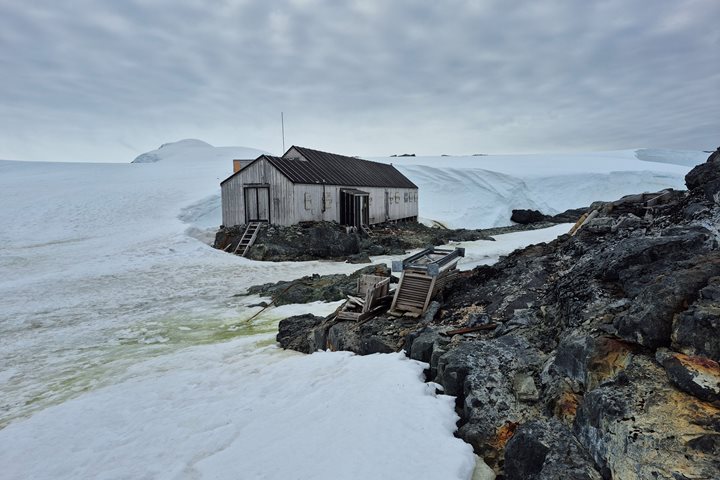

National Geographic Orion awoke as we navigated our way across the final leg of the Drake Passage toward Antarctica. We were accompanied by a large collection of seabirds for the duration. As we moved over the continental shelf, blows started to appear on the horizon, thus yielding sightings of both humpback and fin whales. It was not long before land was sighted along with the first icebergs. Guests spent the morning enjoying this pelagic life while also learning about penguins and the Antarctic Treaty before bolstering their penguin fix and donning their boots for their first landing on Barrientos Island.

2/28/2025
Read
National Geographic Resolution
Northbound Drake Passage, Cape Horn, and the Beagle Channel
This morning, we had a later start than usual after a late night enjoying the crew show. Our galley team gifted us with a fulfilling brunch. We then had a brilliant forum about climate change with the participation of our panel of experts onboard. Afterward, our expedition leader called us to the bow to see Cape Horn, which was only a few miles ahead. The good weather allowed us to have a smooth and fast crossing, allowing extra time to swing by Cape Horn, the most southern tip of the Americas. Over the PA system, Steven provided a very interesting description of the historical importance of this area, then Pablo read a beautiful poem, a memorial to the seaman lost at sea. We could see the monument in the distance, two metal sheets that depict an albatross in flight. During the afternoon, we enjoyed Madalena’s presentation about Women in Antarctica. This was an incredible voyage through the struggles and delays of allowing women to participate in science and logistics in Antarctica. We entered the Beagle Channel around 17:00 and we encountered black-browed albatrosses, cormorants, dolphins, and whales. On our final approach to the beautiful city of Ushuaia, we passed by Les Eclaireurs Lighthouse and some of the seals that live in the Bridges Islands Archipelago.