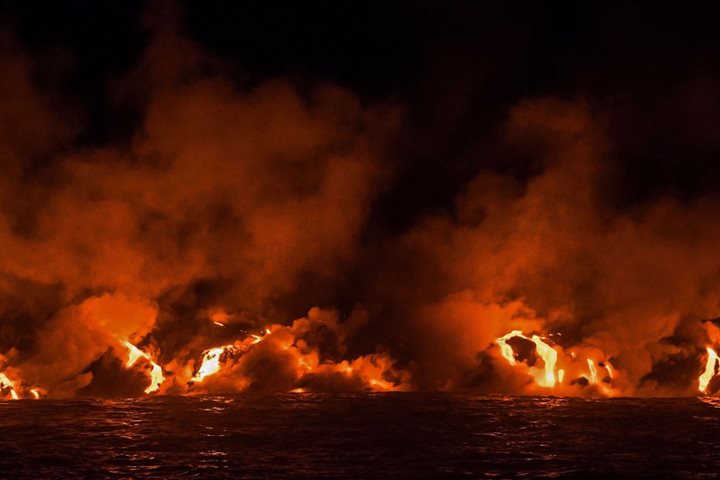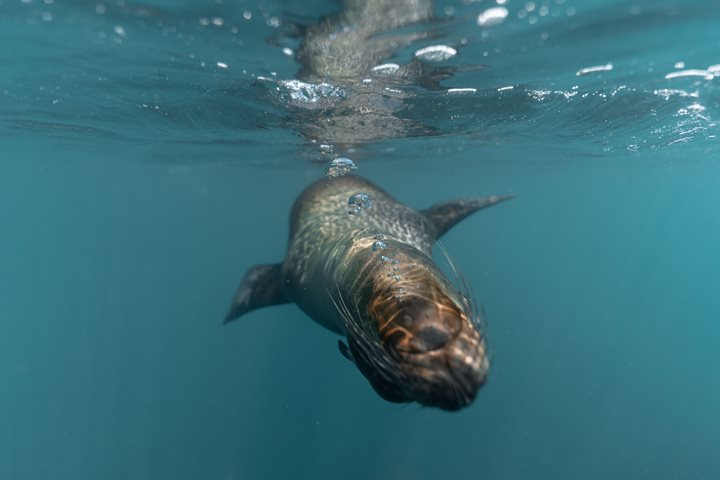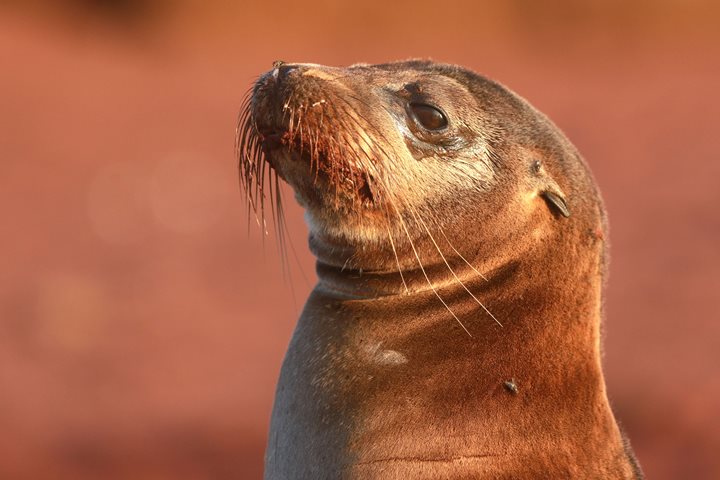
This morning we visited the little island of South Plaza where sea lions were all around the disembarkation area. It is a great place to observe the Galapagos land iguanas and many sea birds such as the swallow-tailed gulls. Today our guests witnessed a female sea lion deliver her pup. It was a dramatic experience as the new born was dead and not only the female sea lion mourned, but all of us. Life is not easy in the Archipelago and only the strongest animals survive. In the afternoon we visited Santa Fe Island, a great visitor site for snorkeling, kayaking, and amazing walks to see the unique Santa Fe land iguana! What a memorable day! We hope Galapagos stays like this for all generations to come.
- Daily Expedition Reports
- 09 Nov 2017
South Plaza and Santa Fe Islands, 11/9/2017, National Geographic Islander
- Aboard the National Geographic Islander
- Galápagos
Vanessa Gallo, Naturalist
Vanessa Gallo’s grandparents arrived in the Galápagos Islands in 1936, making her the third generation of her family to live and work in this magical archipelago. She left the islands for the capital city of Quito for high school, where she discovere...
Read MoreShare Report
Related Reports
11/23/2022
Read
National Geographic Islander II
Isabela and Fernandina
Our day began with the chance to point out a lot of interesting geological features as we enjoyed Zodiac tours along a massive flank of Ecuador Volcano on Punta Vicente Roca. In the afternoon, we took a sunny walk on Punta Espinoza on Fernandina Island. We spotted many iguanas, and a bunch of sea lions hanging around, too.
11/22/2022
Read
National Geographic Islander II
North Seymour & Rabida Islands
Relatively small and low compared to neighboring Santa Cruz, North Seymour is located to the north of Baltra. The island is dry with predominantly low shrubs, like prickly pear cacti. The incense trees are bare during the dry season. Seabirds like frigatebirds and blue-footed boobies nest on the island, and sea lions rest on the sand when they are not fishing. Land and marine iguanas also live here. Rabida is in the middle of the archipelago and has a striking red sand beach. We observed a small colony of sea lions of all ages resting or nursing. Behind the beach, American flamingos nest in a brackish lagoon. This island is full of contrasts and wildlife that we enjoyed observing during this day of expedition.