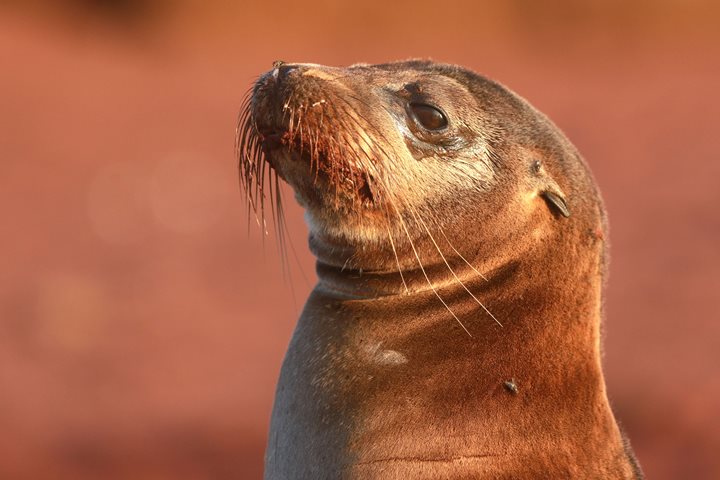
Today we traveled to my home island of Santa Cruz and visited the Giant Tortoise Breeding Center. It’s amazing to see how little these tortoises are as hatchlings, and how big they get through the years! The success of this species is due, in part, to one of the most fruitful programs run by the Galapagos National Park - the restoration of the iconic Galapagos giant tortoise. After our visit we wandered the local town, then headed to the highlands. Our first stop here was at a lava tunnel followed by a local farm known as “El Trapiche”. The afternoon was spent at the Giant Tortoise Natural Reserve, an incredible place housing many of these gentle giants in lush green vegetation. We’ve had a wonderful time, and as a final touch we ended the day with a fun presentation from a local group of musicians.
- Daily Expedition Reports
- 27 Dec 2019
Santa Cruz Island, 12/27/2019, National Geographic Islander
- Aboard the National Geographic Islander
- Galápagos
Vanessa Gallo, Naturalist
Vanessa Gallo’s grandparents arrived in the Galápagos Islands in 1936, making her the third generation of her family to live and work in this magical archipelago. She left the islands for the capital city of Quito for high school, where she discovere...
Read MoreShare Report
Related Reports
11/23/2022
Read
National Geographic Islander II
Isabela and Fernandina
Our day began with the chance to point out a lot of interesting geological features as we enjoyed Zodiac tours along a massive flank of Ecuador Volcano on Punta Vicente Roca. In the afternoon, we took a sunny walk on Punta Espinoza on Fernandina Island. We spotted many iguanas, and a bunch of sea lions hanging around, too.
11/22/2022
Read
National Geographic Islander II
North Seymour & Rabida Islands
Relatively small and low compared to neighboring Santa Cruz, North Seymour is located to the north of Baltra. The island is dry with predominantly low shrubs, like prickly pear cacti. The incense trees are bare during the dry season. Seabirds like frigatebirds and blue-footed boobies nest on the island, and sea lions rest on the sand when they are not fishing. Land and marine iguanas also live here. Rabida is in the middle of the archipelago and has a striking red sand beach. We observed a small colony of sea lions of all ages resting or nursing. Behind the beach, American flamingos nest in a brackish lagoon. This island is full of contrasts and wildlife that we enjoyed observing during this day of expedition.