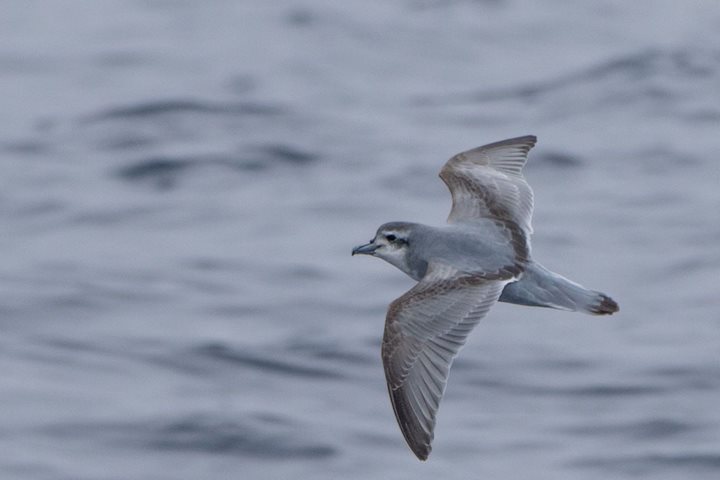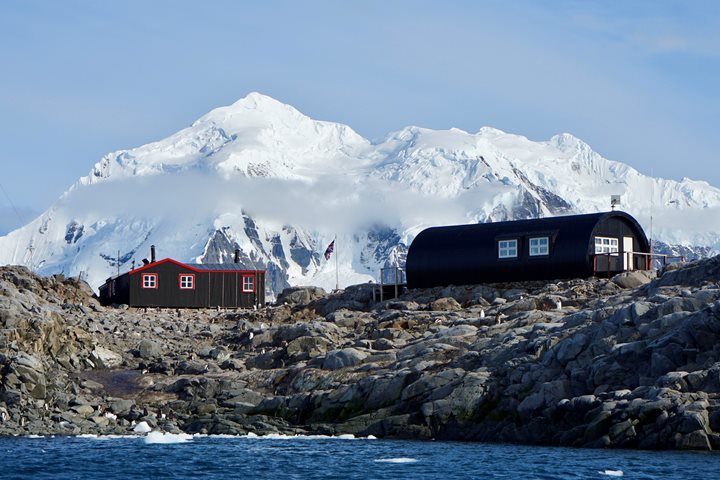

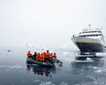
Cruising in toward Paulet Island you had the sense of the adventure that awaited us this morning. The shore, and the hillsides were covered in Adelie Penguins! The medium walk along the beach back to the main landing site was filled with adventure, and wildlife of all sorts. Penguins, Weddell seals, Antarctic shags and a unique bird called the snowy sheathbill. The finale was a visit to the remains of an historic remains of a stone hut where 17 men of the Nordenskjold Expedition had to survive a winter. Next was an amazing ship cruise through countless massive tabular icebergs in the northern Weddell Sea. This was on our way to a group of islands known as the Danger Islands, where we were lucky enough to Zodiac cruise ice-filled waters with incredible scenery, Leopard Seals and an abundance of Adelie penguins. These islands hold probably a large percentage of the world’s Adelie population!
2/18/2020
Read
National Geographic Orion
Drake Passage and Beagle Channel
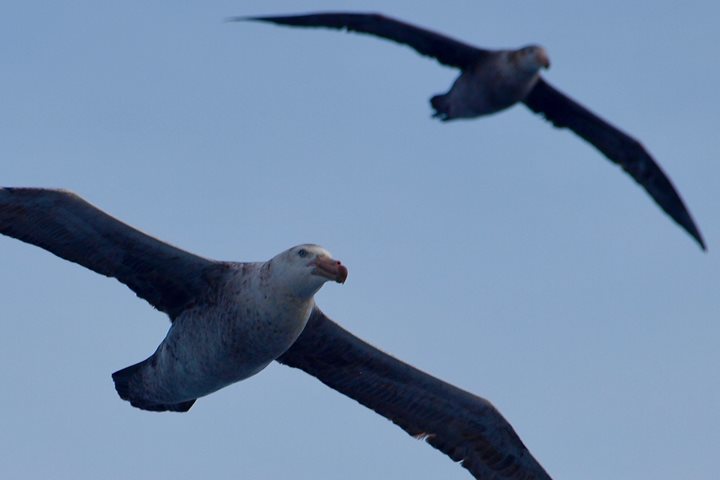
As we approached the end of our expedition, our final full day at sea offered both a full plate of activities on board as well as a chance to reflect on all the experiences of the last ten days. Wind, waves, and wildlife are all important parts of crossing the Drake Passage. We started the morning with ample quantities of the first two, but even with the occasional brace of spray covering the bow and bridge we still made good time with a reasonably comfortable ride on National Geographic Orion . Everyone found their own niche on the ship, writing in journals, editing photos, maybe even getting a head start on packing for the upcoming air travel home. There were a number of presentations also to divert our minds from that latter chore. Conor Ryan presented an informative talk on “The Smell of the Sea” while Jonathan Zaccaria reflected on his own experiences at research stations in “Overwintering in Antarctica.” Later Rob Edwards discussed the data and implications of human influences on global processes in “Welcome to the Anthropocene.” The great wilderness of the Drake Passage eased into a calm and gently rolling sea by late afternoon. We crossed the continental shelf surrounding the southern islands of South America, welcoming many seabirds around the ship, including sooty shearwaters, giant petrels, black-browed albatross, and both giants of the sky: the wandering and the royal albatrosses. As always, there were also full plates of amazing food and the diverse menus that we’ve come to expect during meals. One could only smile at the luxury we’ve been afforded while exploring such a remote place, with the paradox that returning now to the comforts of home with a few extra pounds aboard might mean we need to go back to somewhat more meager rations. However, there is so much more than just the memory of these comforts and cameras full of wildlife photography. One cannot help but feel all the richer for directly experiencing the Antarctic environment as we have, and for the new friends who have shared it with us.