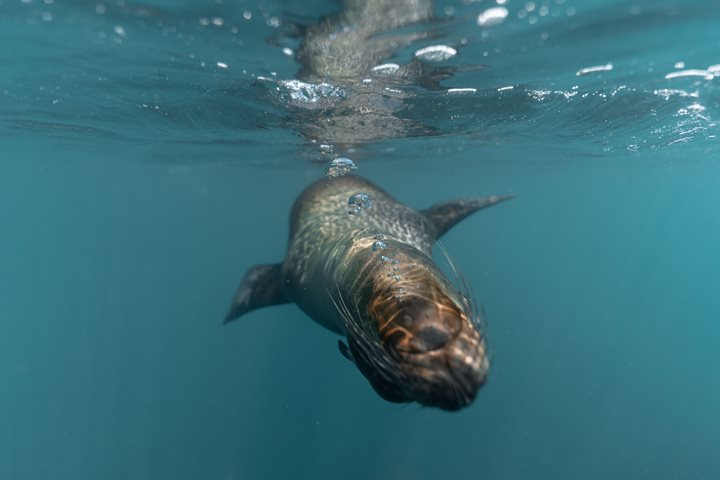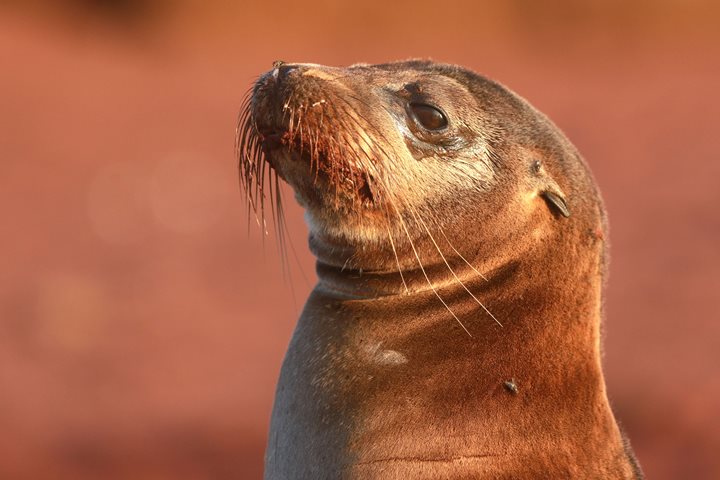
After exploring for two days the western area of the archipelago, today we arrived at Santiago Island in the central region of the Galapagos. We started our day with a visit to Espumilla Beach, a pristine beach surrounded by different species of mangroves. Some of our guests explored this area by kayaking. Later on in the morning, naturalist Christian Saa gave a presentation about the human history of the Galapagos. There was a small change in the itinerary as the northern winds made it difficult to snorkel off of Buccaneers Cove. In the afternoon we visited Puerto Egas, where the water conditions were much better to experience snorkeling. We also hiked along the astonishing coastline looking for Galapagos fur seals and Galapagos sea lions. We ended our day with a delicious BBQ of Ecuadorian treats and with a rewarding feeling of having explored various pristine sites of the Galapagos. Tomorrow we will have our first encounter with the urban life of the Galapagos as we are sailing towards Santa Cruz Island, for sure, another exhilarating day!
- Daily Expedition Reports
- 02 Nov 2017
Espumilla Beach, 11/2/2017, National Geographic Islander
- Aboard the National Geographic Islander
- Galápagos
José Guerrero, Naturalist/Certified Photo Instructor
José Guerrero Vela is an Ecuadorian permanent resident of the Galapagos. His mother was born in the islands and his grandfather was one of the first generation of teachers in the Galapagos, which has always inspired him to promote education as the ma...
Read MoreShare Report
Related Reports
11/23/2022
Read
National Geographic Islander II
Isabela and Fernandina
Our day began with the chance to point out a lot of interesting geological features as we enjoyed Zodiac tours along a massive flank of Ecuador Volcano on Punta Vicente Roca. In the afternoon, we took a sunny walk on Punta Espinoza on Fernandina Island. We spotted many iguanas, and a bunch of sea lions hanging around, too.
11/22/2022
Read
National Geographic Islander II
North Seymour & Rabida Islands
Relatively small and low compared to neighboring Santa Cruz, North Seymour is located to the north of Baltra. The island is dry with predominantly low shrubs, like prickly pear cacti. The incense trees are bare during the dry season. Seabirds like frigatebirds and blue-footed boobies nest on the island, and sea lions rest on the sand when they are not fishing. Land and marine iguanas also live here. Rabida is in the middle of the archipelago and has a striking red sand beach. We observed a small colony of sea lions of all ages resting or nursing. Behind the beach, American flamingos nest in a brackish lagoon. This island is full of contrasts and wildlife that we enjoyed observing during this day of expedition.