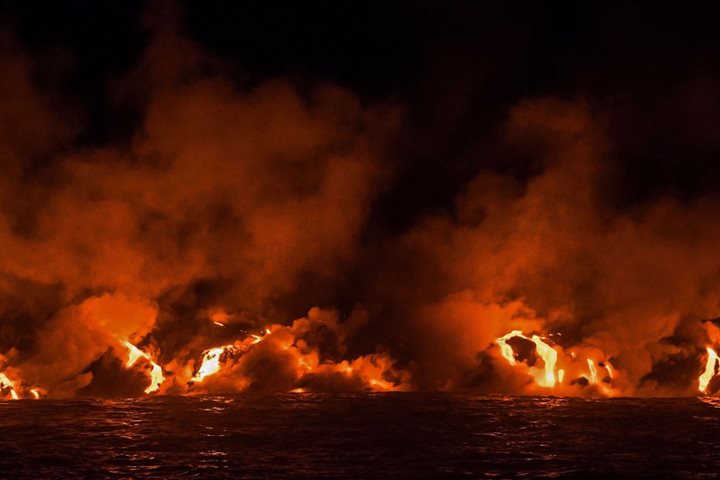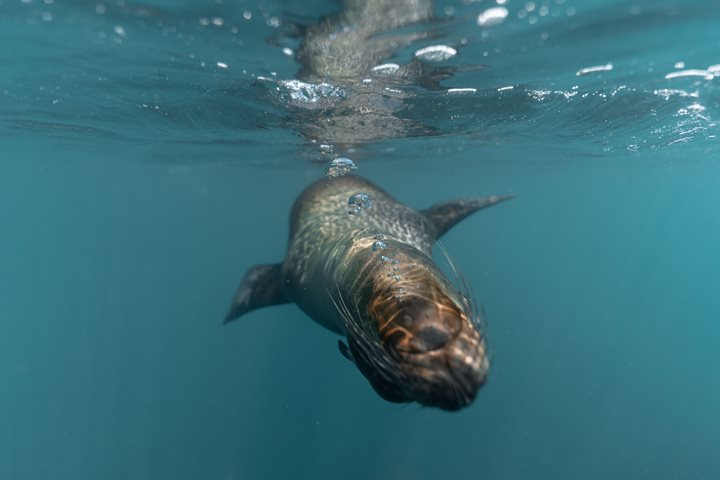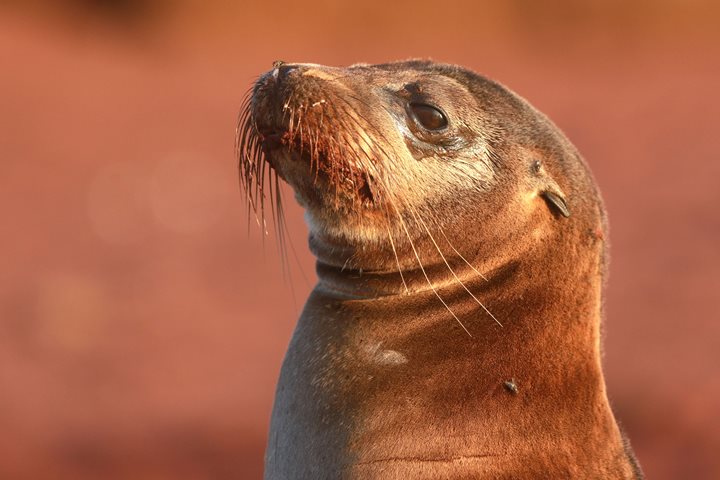
We spent the day on one of the oldest islands of the archipelago, Espanola. It was a day filled with activities, with an early kayaking excursion, to deep water snorkeling, and an easy and fantastic stroll along the beautiful white sandy beach of Gardner Bay. In the afternoon we visited Punta Suarez, with an explosion of wildlife and a great place for nature photography. We enjoyed observing the Espanola mocking birds, Waved albatross, Nazca boobies, swallow-tailed gulls, and the Galapagos sea lion females with their pups. It was an incredible day and the start of a voyage sure to be full of unforgettable experiences!
- Daily Expedition Reports
- 20 Nov 2017
Espanola Island, 11/20/2017, National Geographic Islander
- Aboard the National Geographic Islander
- Galápagos
Vanessa Gallo, Naturalist
Vanessa Gallo’s grandparents arrived in the Galápagos Islands in 1936, making her the third generation of her family to live and work in this magical archipelago. She left the islands for the capital city of Quito for high school, where she discovere...
Read MoreJulio Rodriguez, Videographer
Born and raised in Ecuador, the son of Spanish and American parents, Julio developed a passion for storytelling and environmental conservation at an early age. After majoring in History at Carleton College (Minnesota), with a thesis on the Basque ant...
Read MoreShare Report
Related Reports
11/23/2022
Read
National Geographic Islander II
Isabela and Fernandina
Our day began with the chance to point out a lot of interesting geological features as we enjoyed Zodiac tours along a massive flank of Ecuador Volcano on Punta Vicente Roca. In the afternoon, we took a sunny walk on Punta Espinoza on Fernandina Island. We spotted many iguanas, and a bunch of sea lions hanging around, too.
11/22/2022
Read
National Geographic Islander II
North Seymour & Rabida Islands
Relatively small and low compared to neighboring Santa Cruz, North Seymour is located to the north of Baltra. The island is dry with predominantly low shrubs, like prickly pear cacti. The incense trees are bare during the dry season. Seabirds like frigatebirds and blue-footed boobies nest on the island, and sea lions rest on the sand when they are not fishing. Land and marine iguanas also live here. Rabida is in the middle of the archipelago and has a striking red sand beach. We observed a small colony of sea lions of all ages resting or nursing. Behind the beach, American flamingos nest in a brackish lagoon. This island is full of contrasts and wildlife that we enjoyed observing during this day of expedition.