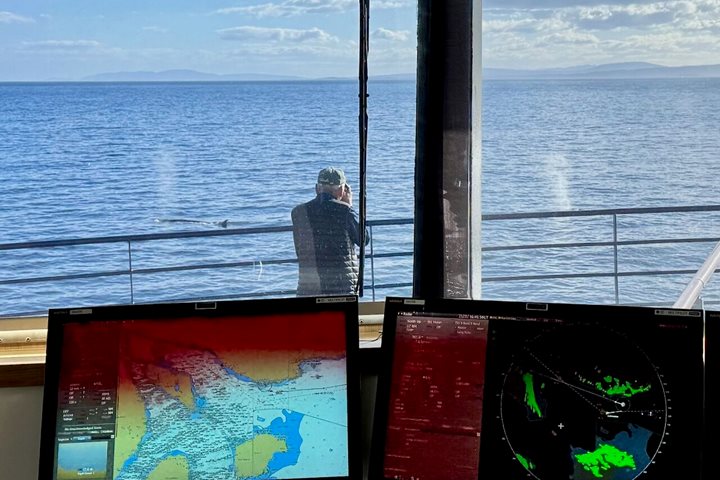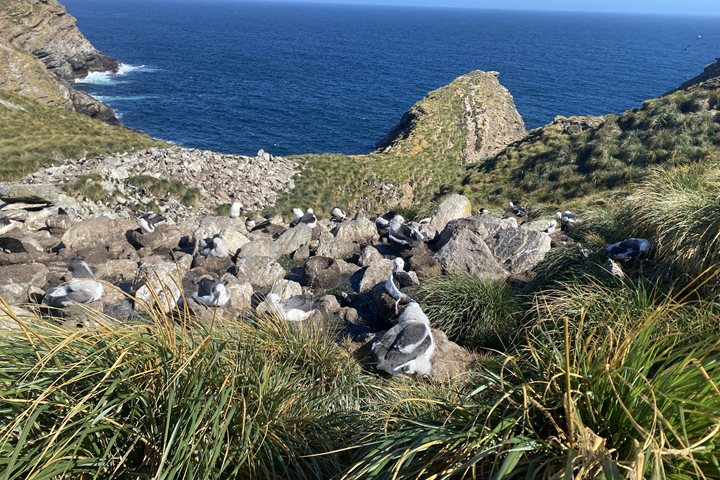
What a welcome to South Georgia- at last, the wildlife mecca, bustled before our eyes today. We explored Elsehul via Zodiacs as swarms of birds, pinnipeds, and even a bit of carnage could be found! Macaroni penguins were arriving at the rocky cliffs to nest and even a chinstrap penguin was spotted. Some of the naturalists noted seeing more light-mantled, grey-headed albatross in the air and nesting here in Elsehul than ever before. Indeed a fantastic sign of restoration to the seabird populations post rat eradication. The weather was so splendid that we were able to cruise, particularly closely, through the Willis Islands. The steep cliffs were teeming with yet more large birds, seemingly millions of small prions, and a humpback whale to boot! In the afternoon we all could hardly pull ourselves away from the bow after the expert navigation of our bridge team brought the ship nearly to the beaches of Salisbury Plain.
- Daily Expedition Reports
- 31 Oct 2017
Elsehul and Ship Cruising, 10/31/2017, National Geographic Explorer
- Aboard the National Geographic Explorer
- Antarctica
Caitlyn Webster, Undersea Specialist
Caitlyn grew up entranced by the sea. She first became SCUBA certified while in high school in southern California and found her true passion diving and studying marine life. After graduating from Cal Poly State University: San Luis Obispo with a deg...
Read MoreShare Report
South Georgia and the Falklands
VIEW ITINERARYRelated Reports
3/14/2025
Read
National Geographic Resolution
New Island, Falkland Islands
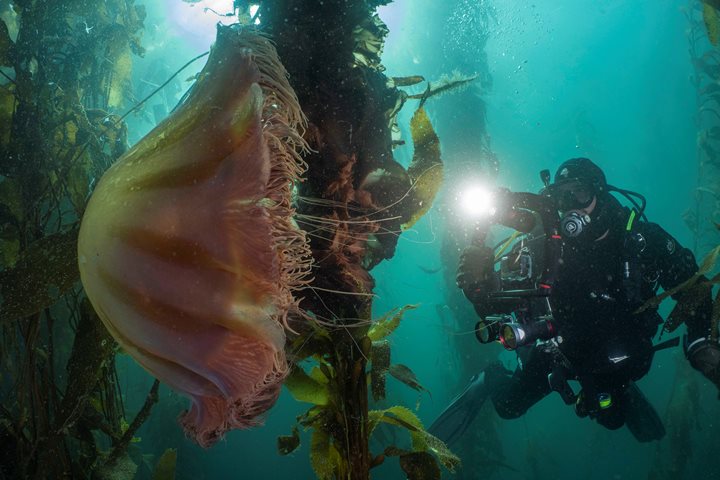
Our final day of operations for the expedition (and the season) took place at New Island, one of the most beautiful islands in the Falkland Islands. Guests were amazed by the sheer cliffs of the outer coast, home to thousands of rockhopper penguins and even more black-browed albatross. While guests were ashore, the undersea team explored the underwater world of the Falkland Islands. We cruised through the amber forest of giant kelp and photographed the large sun stars but also some of the smaller denizens like tessellated patagonotothen fishes and beautiful purple-lined isopods. The highlight of the dive was one of the largest jellies either of us had seen. A gargantuan lion’s mane jelly was wrapped up in the kelp and its bell was almost 4 feet across. Truly a sight to behold and a favorite when shown to the guests at recap.
3/13/2025
Read
National Geographic Resolution
West Point Island
Our destination this afternoon remains my very favorite place in the Falklands. A warm welcome is always given by the caretakers of this lovely place, Theis and Kiki – Swedish and German respectively. They were at the end of their nine years here and we were among the last ships to visit this season. Of course, we visit the island because of the wildlife, and, after a nice forty-minute walk, we arrived at the Devil’s Nose albatross colony. Here, we found thousands of black-browed albatrosses living cheek by jowl with hundreds, if not thousands of rockhopper penguins. It is not always a happy marriage, but generally they get on, the albatross helping protect the penguin eggs and chicks from predation by the local Johnny rooks aka striated caracaras. A good walk deserves a fine afternoon tea, and we were treated to just that back at the farmhouse. In the garden, a yellow rose flowered beautifully overlooking the place where Lars Eric Lindblad’s ashes were scattered.