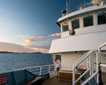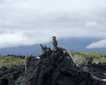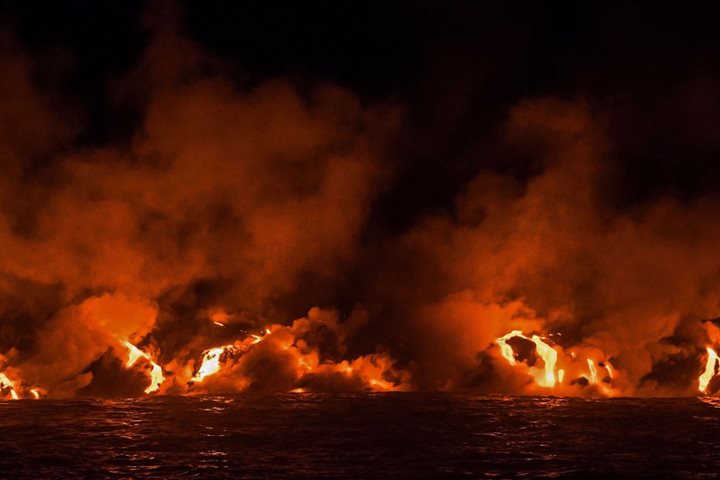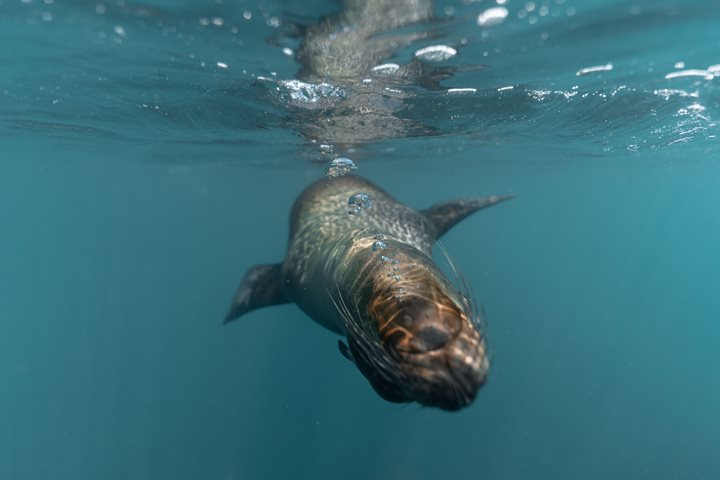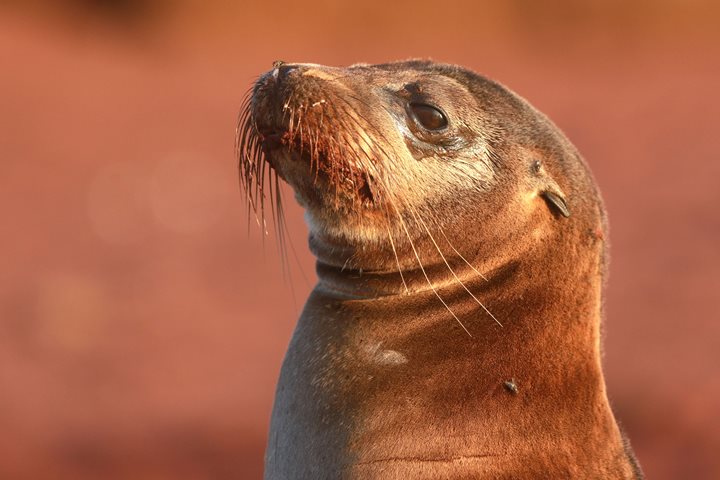
Our first full day in the Galapagos was pure magic and gave us a feel of what is yet to come. We had an early active day and woke up anchored on the northern side of Bartholomew Island. After our dry landing, we climbed a wooden stairway to explore further inland, and identified four endemic settler plants. At the summit, we had a stunning view! The sun shone towards James Island with Pinnacle Rock, the most iconic formation of the Galapagos, in the background. After breakfast we went snorkeling to explore the underwater world; some swam along the beach, and others in deeper ocean water. Lunch was a traditional Ecuadorian feast and served as we sailed to Rábida or Jervis Island. Here we kayaked, snorkeled, and had Zodiac rides along the coast. As a relaxing cap to end the day, we visited a beautiful red sand beach at sunset.
- Daily Expedition Reports
- 06 Jan 2020
Bartholomew and Jervis Islands, 1/6/2020, National Geographic Islander
- Aboard the National Geographic Islander
- Galápagos
Fabian Bucheli, Naturalist
Fabian Bucheli studied at the German School in Quito, graduated from the University of California with a bachelor of science in administration, and earned a master’s degree in international management from Thunderbird School of Global Management in A...
Read MoreShare Report
Related Reports
11/23/2022
Read
National Geographic Islander II
Isabela and Fernandina
Our day began with the chance to point out a lot of interesting geological features as we enjoyed Zodiac tours along a massive flank of Ecuador Volcano on Punta Vicente Roca. In the afternoon, we took a sunny walk on Punta Espinoza on Fernandina Island. We spotted many iguanas, and a bunch of sea lions hanging around, too.
11/22/2022
Read
National Geographic Islander II
North Seymour & Rabida Islands
Relatively small and low compared to neighboring Santa Cruz, North Seymour is located to the north of Baltra. The island is dry with predominantly low shrubs, like prickly pear cacti. The incense trees are bare during the dry season. Seabirds like frigatebirds and blue-footed boobies nest on the island, and sea lions rest on the sand when they are not fishing. Land and marine iguanas also live here. Rabida is in the middle of the archipelago and has a striking red sand beach. We observed a small colony of sea lions of all ages resting or nursing. Behind the beach, American flamingos nest in a brackish lagoon. This island is full of contrasts and wildlife that we enjoyed observing during this day of expedition.